
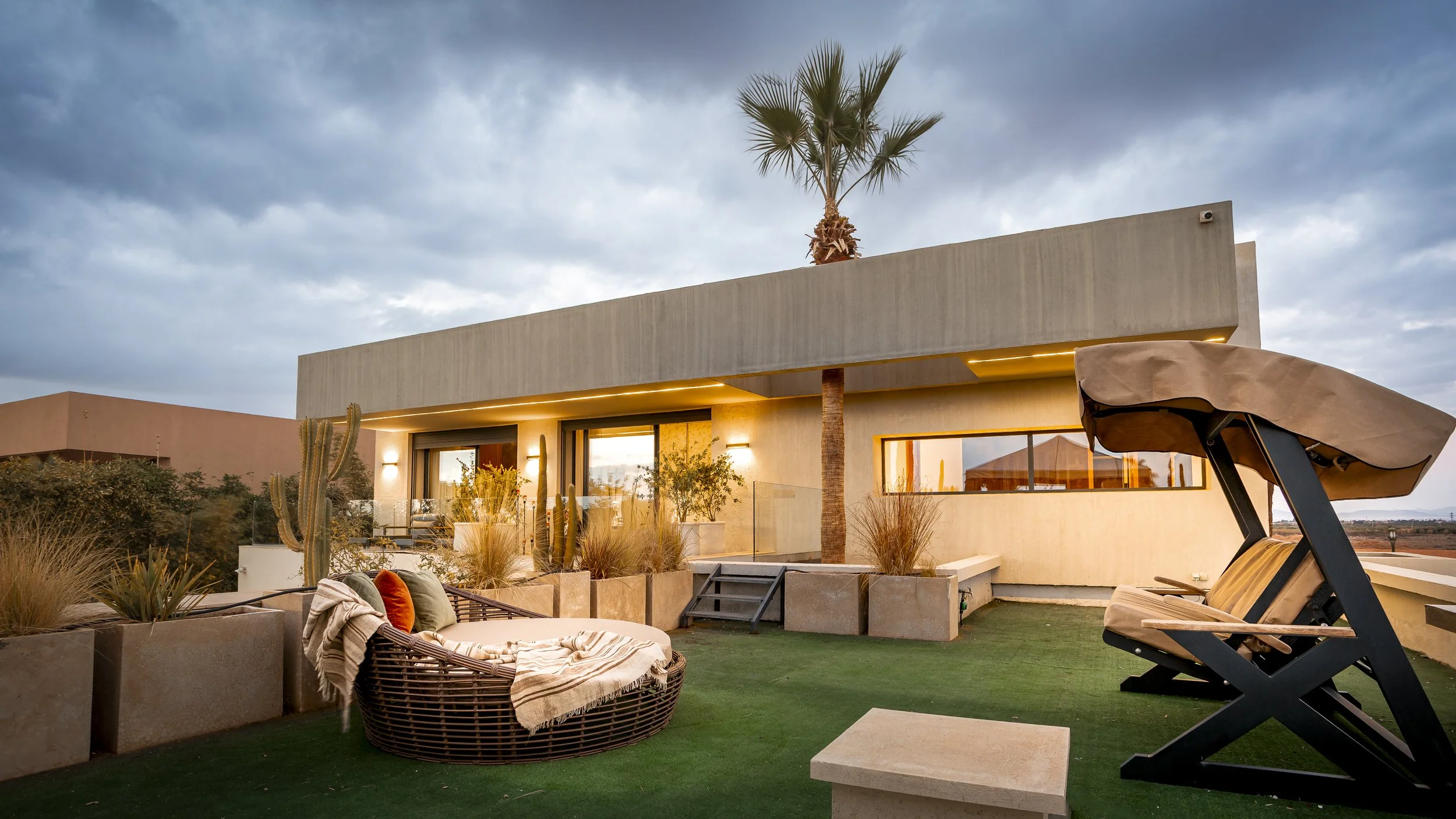
Living in Morocco: Why the World's Best-Kept Secret Is Finally Out
It All Begins Here
By Amal Lafhal | Lifestyle & Real Estate Expert
Let's be honest. Most people still think of Morocco as a vacation destination. A long weekend in Marrakech, a few photos in a riad courtyard, a tagine they'll be talking about for years. But those of us who've spent decades building homes, designing living spaces, and crafting lifestyles here know the real truth: Morocco isn't a place you visit. It's a place you stay. And once you understand what daily life here actually looks like, you'll wonder why you ever lived anywhere else.
The Cost of Living in Morocco: Your Money Goes Further Than You Think
One of the most compelling reasons expats, remote workers, and savvy investors are choosing to live in Morocco is the extraordinary value it offers. From Tangier to Agadir, Casablanca to the rising luxury communities of Marrakech and Essaouira, your dirham and especially your dollar or euro stretches in ways that would make your accountant blush. A beautifully appointed apartment in the heart of Marrakech's Guéliz neighborhood rents for a fraction of what a comparable space would cost in Lisbon, Paris, or Dubai. World-class restaurants, fresh markets overflowing with seasonal produce, household help, spa treatments. The lifestyle that costs a fortune elsewhere is simply... Tuesday here. At Amal Signature Living, we've spent decades watching people arrive wide-eyed and leave absolutely certain they're never going back to overpriced city living.
Morocco's Climate: 300 Days of Sun Isn't Just a Tourism Tagline
If you've been Googling "best places to live with good weather," stop scrolling. You've found it. Living in Morocco means navigating a remarkably diverse climate depending on where you plant your roots. The Atlantic coast offers a Mediterranean breeze that keeps summers genuinely enjoyable. The interior cities like Marrakech deliver that glorious dry heat and cool evenings that make outdoor living a year-round affair. The Atlas Mountain regions? Four distinct seasons with snowcapped peaks that would make a Swiss hotelier nervous. Morocco's geography is absurdly generous: desert, mountain, ocean, and forest all within a few hours of each other. For those who believe where you live should feel like living, this is not a small thing.
Culture, Community & the Moroccan Art of Being Present
There's a concept embedded in Moroccan culture that no wellness app has ever managed to replicate: the deep, unhurried art of being somewhere. Moroccans have mastered what the rest of the world is frantically trying to rediscover. Evening promenades through medina streets, mint tea rituals that are genuinely non-negotiable, neighborhood relationships that mean your butcher knows your name and your neighbor drops off pastries during Eid. This is not nostalgia. This is Tuesday again. For families relocating to Morocco, the country's blend of French-language international schools, growing expat communities, and extraordinarily safe neighborhoods (Morocco consistently ranks among the safest countries in Africa and the broader Arab world) makes the transition smoother than expected. The culture doesn't just tolerate outsiders. It genuinely embraces them, provided you show up with curiosity and respect.
Real Estate in Morocco: The Investment the Smart Money Saw Coming
Here's where Amal Signature Living speaks from decades of hard-earned expertise: Moroccan real estate is one of the most compelling opportunities in the global property market right now. Marrakech's luxury villa market has seen sustained demand from European, American, and Gulf buyers who understand that a fully staffed, architect-designed property with a private pool in a walled garden shouldn't cost less than a parking space in London, and yet here we are. The Moroccan government has actively courted foreign investment in property, making ownership relatively straightforward for non-residents. Cities like Rabat and Casablanca are undergoing serious urban reinvention, while coastal gems like Taghazout and Dakhla are drawing surfers, wellness seekers, and design-forward developers in equal measure. Whether you're looking for a signature riad in the medina, a contemporary villa on the Palmeraie, or a coastal retreat with Atlantic views, the window to buy before the world fully catches on is closing. And we've been saying that for years because it keeps being true.
Why Amal Signature Living? Because Morocco Deserves to Be Done Right.
Living in Morocco is extraordinary. Living in Morocco well, with the right property, in the right neighborhood, designed with intention and built to last, is transformative. That's been our mission since day one. At Amal Signature Living, we don't just sell real estate. We architect lifestyles. We understand that a home in Morocco should feel like Morocco: warm, layered, alive with texture and light, rooted in craftsmanship, and built for the way people actually want to live. Whether you're relocating permanently, investing in a second home, or finally making good on that promise you made yourself after your first visit, we're here. Decades deep in this country, this culture, and this craft. Morocco is calling. The only question is whether you're ready to answer.
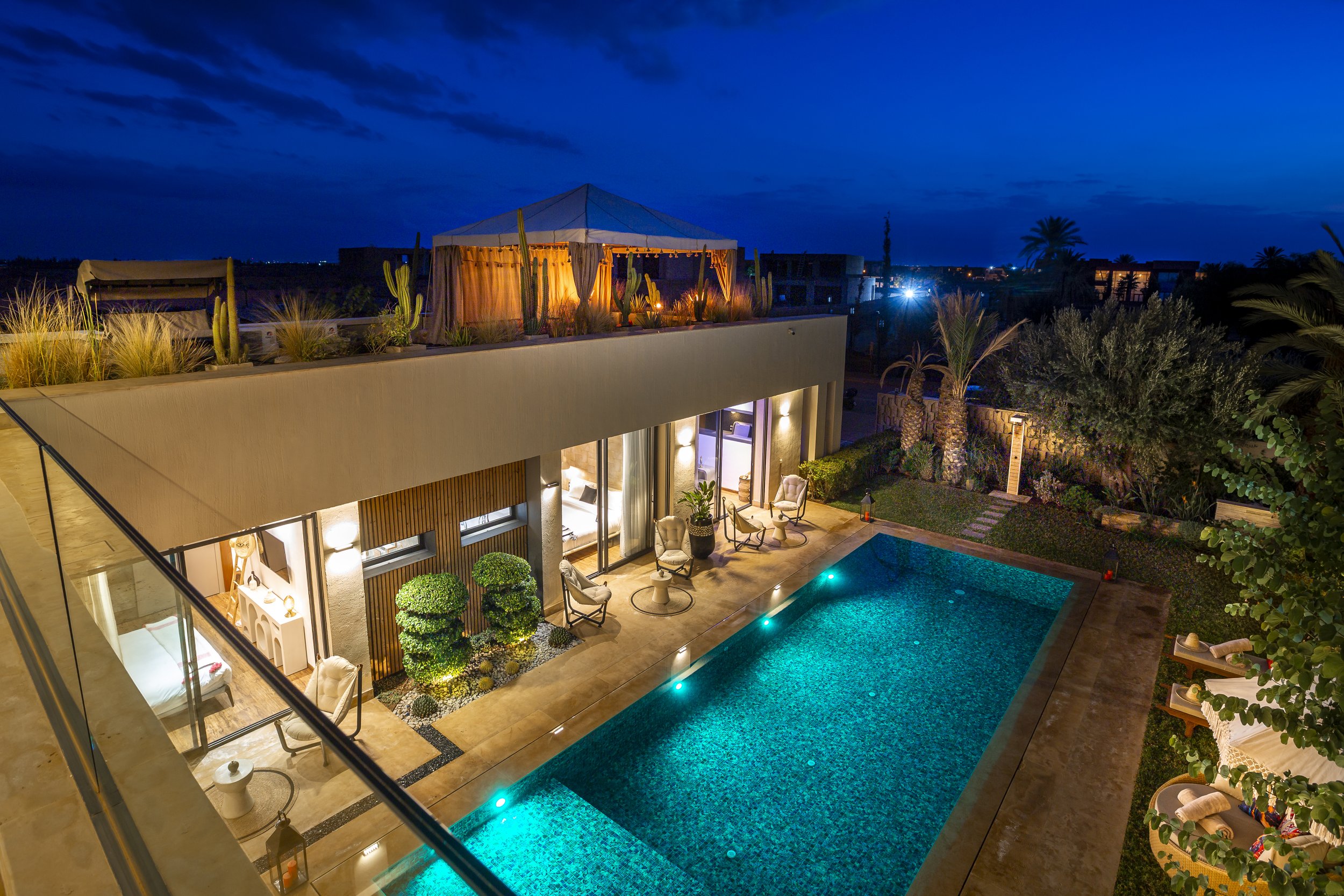
10 things to know about creating your dream Casablanca estate
These are the tips I wish I knew before
By Amal Lafhal | Design, Build & Lifestyle Expert
Casablanca. The name alone carries weight. It's Morocco's beating commercial heart, a city of ocean breezes and Art Deco grandeur, of hustle and hidden elegance. It's not Marrakech's theatrical medina magic, and it's not Rabat's diplomatic reserve. Casablanca is something entirely its own: a cosmopolitan metropolis that rewards those bold enough to put down real roots. And when it comes to building or acquiring an estate here, the rewards are extraordinary. But so is the complexity. After decades of designing, building, and curating signature properties across Morocco, Amal Signature Living is pulling back the curtain. Here are ten things every serious buyer and builder needs to know before breaking ground on their Casablanca dream.
1. Location in Casablanca Is Everything and Not All Neighborhoods Are Created Equal
Casablanca is vast, and the neighborhood you choose will define your entire estate experience. Anfa and California remain the gold standard for luxury residential living, offering wide tree-lined streets, proximity to the Corniche, and the kind of neighbors who've been here for generations. Ain Diab delivers Atlantic-facing glamour with a lifestyle to match. For those seeking something more contemporary, the emerging developments around CFC (Casablanca Finance City) and the Bouskoura corridor are attracting a new wave of architectural ambition. Choosing the right arrondissement is not a detail. It is the foundation of everything else.
2. Moroccan Property Law Favors the Prepared
Foreign nationals can absolutely own property in Morocco, and Casablanca's real estate market is well-structured compared to many in the region. But navigating the Agence Nationale de la Conservation Foncière (ANCFCC), the land registry system, requires expertise. Title verification, fonds de commerce nuances, and the distinction between Melkia and Immatriculation titles are not things to learn on the fly. Work with professionals who know these systems cold. Amal Signature Living has spent decades making sure our clients never encounter a surprise at the notary's table.
3. Casablanca's Architectural Heritage Is a Gift. Respect It.
This city is home to one of the world's great concentrations of Art Deco architecture, and that heritage ripples through the aesthetic DNA of the entire metropolis. When designing your estate, ignoring this context is a missed opportunity of the highest order. The best Casablanca estates in our portfolio find a dialogue between the city's geometric, ornamental European past and the clean, warm modernism of contemporary Moroccan design. The result is something that feels rooted without being nostalgic, and forward-looking without being cold.
4. The Climate Demands Thoughtful Design
Casablanca sits on the Atlantic coast, which blesses it with a genuinely mild climate. But mild doesn't mean passive. The prevailing maritime winds, the salt air, and the occasional fierce Atlantic winter storm all need to be factored into your build. Materials matter enormously. Stone and rendered facades hold up. Cheap cladding does not. Orientation for natural light and cross-ventilation can eliminate the need for aggressive air conditioning in summer. Our philosophy at Amal Signature Living has always been to design with the Casablanca climate, not against it.
5. Your Garden Is Not an Afterthought
In European estate culture, landscape design often comes last. In Casablanca, it should come first, or at minimum, simultaneously. The year-round growing season here is extraordinary. Bougainvillea, olive trees, jasmine, citrus, bird of paradise. A Casablanca estate garden can be genuinely spectacular with the right plan from the start. Integration between interior and exterior living isn't a feature here; it's the entire point. Build your garden into the architectural brief from day one and watch what happens.
6. Local Craftsmanship Is World-Class and Should Be Central to Your Vision
Morocco has one of the most sophisticated artisanal traditions on earth, and Casablanca gives you access to all of it. Zellige tilework, hand-carved plaster, custom wrought iron, bespoke woodwork in cedarwood and thuya. These are not decorative touches. They are the soul of a Moroccan estate. At Amal Signature Living, we work with master craftsmen whose families have been perfecting these techniques for generations. Importing your finishes from abroad when you're sitting in the capital of Moroccan craftsmanship is, frankly, a waste of both money and opportunity.
7. Budget Intelligently and Build in a Contingency
Casablanca construction costs are genuinely competitive by international standards, but that doesn't mean the process is without financial surprises. Permitting timelines, material sourcing, and the occasional structural discovery mid-build are realities in any market. Our hard-won advice: build a 15 to 20 percent contingency into your estate budget from the outset, not as a sign of pessimism but as a mark of experience. The estates that get built beautifully and on schedule are invariably the ones with a client who planned for reality, not just the dream.
8. Security and Privacy Are Non-Negotiable
Casablanca's luxury residential neighborhoods are safe, but a well-designed estate takes nothing for granted. Perimeter design, integrated security systems, smart home technology, and thoughtful approach architecture, meaning how guests, staff, and service vehicles move around the property, should be part of the initial design brief, not retrofitted at the end. The estates we're proudest of are the ones where security is invisible: woven so seamlessly into the architecture that you feel the privacy without ever feeling the fortress.
9. The Permitting Process Requires Patience and the Right Partners
Morocco's urban planning regulations are well-defined, and Casablanca's municipality takes compliance seriously. Permit applications, architectural sign-offs, and construction authorizations follow a structured process that, with the right local legal and architectural team, moves predictably. Without that team? It stalls. We cannot overstate the value of working with professionals who have established relationships within the permitting ecosystem. It is not about shortcuts. It is about knowing the system, speaking its language, and moving with it rather than against it.
10. Your Estate Should Tell a Story That Is Unmistakably Yours
This is the one that matters most. After the legal work is done, the permits are secured, the craftsmen engaged, and the garden planned, what you're really building is a life. Your Casablanca estate should feel like an extension of who you are: your aesthetic, your rhythms, your aspirations. At Amal Signature Living, we don't believe in generic luxury. We believe in specific, personal, deeply considered spaces that couldn't belong to anyone else. Casablanca is a city that rewards boldness and punishes mediocrity. Your estate should do the same.
Ready to begin? Amal Signature Living brings decades of expertise in Moroccan design, construction, and luxury real estate to every project we take on. Your Casablanca estate doesn't build itself, but with the right partner, it becomes something better than you imagined.
Contact Amal Signature Living to start the conversation.
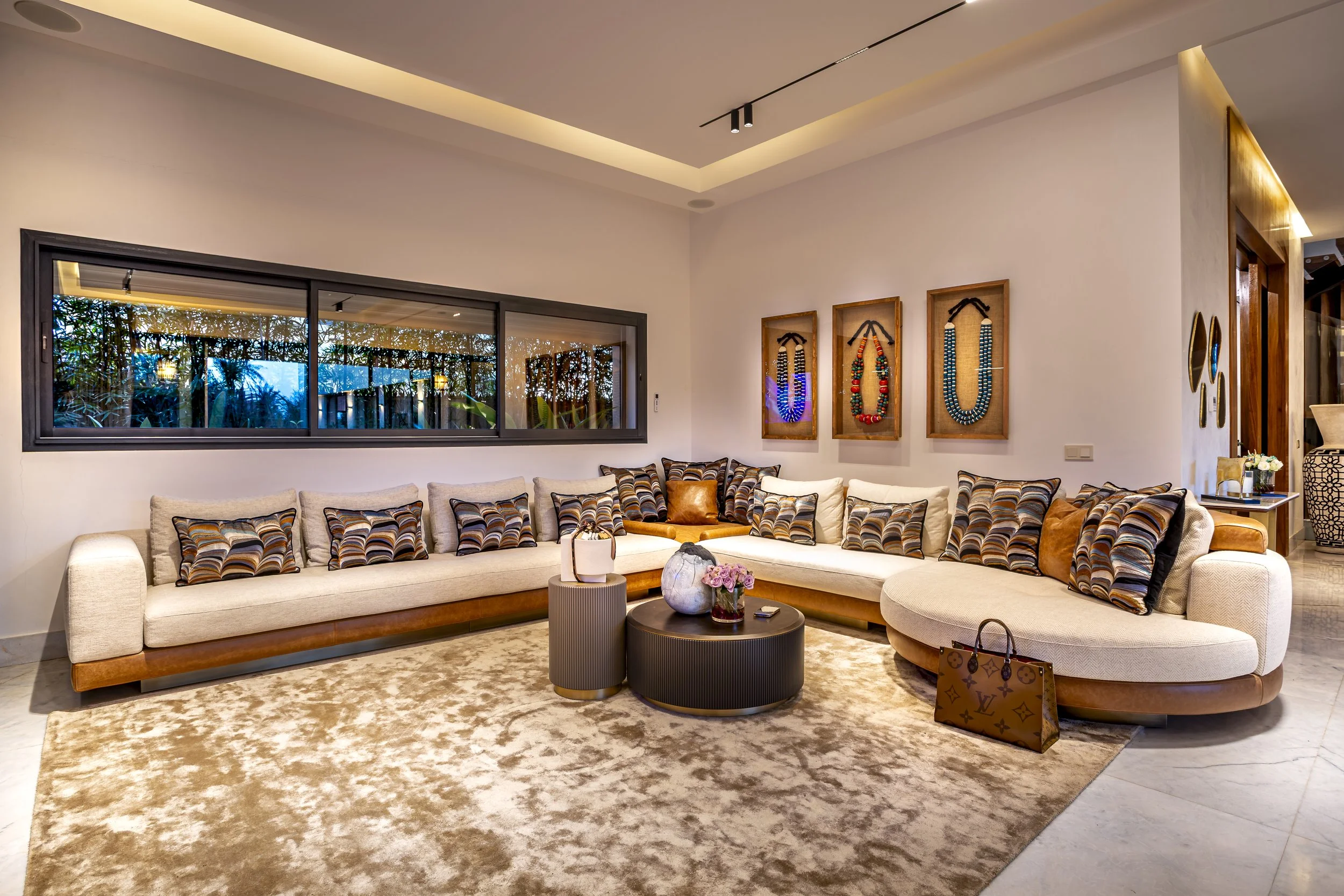
Sourcing Luxury: The Art of Furnishing a Moroccan Estate with Intention
How we make it happen
Sourcing Luxury: The Art of Furnishing a Moroccan Estate with Intention
By Amal Signature Living | Design, Build & Lifestyle Experts
There is a moment in every great estate project when the architecture is complete, the walls are up, the light falls exactly as you planned, and you stand in the middle of it all and think: now what goes in here? This is the moment that separates a beautiful house from a truly extraordinary home. Furnishing a Moroccan estate, particularly one in a city as layered and cosmopolitan as Casablanca or as sensorial as Marrakech, is not a shopping exercise. It is a curation. And like all great curation, it requires knowledge, patience, discernment, and the willingness to look everywhere, from the workshop at the end of a medina alley to the showrooms of Milan, without prejudice.
At Amal Signature Living, sourcing luxury furnishings is one of the most exciting parts of what we do. It is also one of the most misunderstood. So let's talk about it honestly.
The First Rule: Luxury Is Not a Price Tag
Before we discuss where to source, we need to agree on what we're sourcing. Luxury, in the context of a Moroccan estate, is not about spending the most money possible. It is about acquiring pieces that are exceptional in their craft, singular in their character, and right for the space they inhabit. A hand-knotted Berber rug from the High Atlas, made by artisans using techniques unchanged for centuries, is every bit as luxurious as a custom sofa from a Parisian atelier. The question is never "how much did this cost?" The question is always "is this extraordinary?" That shift in thinking changes everything about how you approach the sourcing process.
Going Local: Morocco's Artisanal Ecosystem Is Unmatched
Let's start at home, because Morocco deserves that respect. The country's artisanal sector is not a tourist amenity. It is a living, breathing, world-class manufacturing ecosystem that produces some of the most beautiful handcrafted objects on earth. The challenge for most buyers is knowing how to access it properly, beyond the surface layer of souvenir markets and into the workshops where the real work happens.
In Fès, the ancient medina is home to master woodworkers producing extraordinary pieces in thuya, cedarwood, and walnut, with inlay work so precise it defies belief. In Marrakech, the Semmarine quarter and surrounding artisan cooperatives are where you'll find zellige tile cutters, plaster carvers, and ironwork fabricators who can execute bespoke commissions to architectural specification. In the Souss region and throughout the Atlas, weavers produce rugs and textiles with a depth of color and texture that no machine-made equivalent can touch.
For estate furnishings, the opportunity is to commission original pieces rather than buy off the shelf. A custom cedarwood library. A hand-forged chandelier sized precisely for your double-height salon. A zellige-topped dining table built to your exact dimensions. These are not compromises or "local alternatives" to imported furniture. They are the genuine article, objects with soul, provenance, and a story that belongs specifically to your home.
The International Layer: When to Look Beyond Morocco's Borders
There is no contradiction between celebrating Moroccan craftsmanship and sourcing internationally for the pieces that call for it. A great estate is not a manifesto. It is a home. And some things simply require going further afield.
Italy remains the undisputed capital of upholstered furniture, and for good reason. The quality of hand-stitched leather, the precision of custom frame construction, and the breadth of fabric choices available from Italian manufacturers like Minotti, Flexform, and Poltrona Frau represent a standard that is genuinely difficult to match elsewhere. For a Casablanca drawing room or a Marrakech salon that calls for deep, enveloping sofas with clean contemporary lines, Italian upholstery is often the right answer.
Belgium and France carry equally serious credentials for decorative lighting, custom drapery, and architectural textiles. Belgian linen in particular has a weight and texture that works beautifully in the Moroccan climate, both in terms of aesthetics and practicality. For window treatments in a coastal Casablanca villa or a high-ceilinged riad, custom Belgian linen drapery is a quiet act of luxury that rewards every person who enters the room.
For statement decorative objects, antiques, and one-of-a-kind pieces, the auction houses of London and Paris, as well as the antique districts of Marrakech's Bab Doukkala and the Fondouk Lihoudi, offer extraordinary finds for buyers who know what they're looking for. An 18th-century French console in a Moroccan estate doesn't clash with its surroundings. In the right space, with the right eye, it creates a conversation between cultures that is precisely what a truly sophisticated interior should do.
The Art of Mixing: Where the Magic Actually Happens
Here is the truth that takes years of experience to fully understand: the most memorable interiors are never entirely local and never entirely imported. They are a conversation. A hand-hammered Moroccan copper pendant light over an Italian marble dining table. Belgian linen curtains framing a view of an Atlantic-facing garden planted with native Moroccan species. A Berber kilim layered over a French oak parquet floor. These combinations work not because they follow a formula but because they are chosen with intention, each piece selected for its individual excellence and then placed in relationship with other excellent things.
At Amal Signature Living, our sourcing process for every estate project begins with a material palette and a character brief before it ever becomes a procurement list. We ask: what is this home trying to say? What feeling should a guest have the moment they walk through the door? What should the quality of light on these surfaces communicate about the people who live here? The answers to those questions determine everything that follows, including where in the world we go to find it.
Practical Wisdom: What the Sourcing Process Actually Looks Like
For those embarking on an estate furnishing project for the first time, a few hard-earned realities are worth knowing upfront.
Lead times on custom pieces, whether from local artisans or international manufacturers, are not suggestions. A bespoke cedarwood piece from a Fès workshop may take four to six months. Custom upholstery from an Italian manufacturer can run twelve to sixteen weeks from confirmation of fabric selection. Plan your sourcing calendar backwards from your move-in date, not forwards from your enthusiasm.
Logistics for international pieces require expertise in Moroccan customs and import regulations. Duties, documentation, and port clearance are navigable with the right freight partner but genuinely painful without one. This is not a DIY exercise for a high-value shipment.
Build a contingency into your furnishings budget, not just your construction budget. Fabric gets discontinued. A piece arrives and doesn't work in the actual space the way it worked in the rendering. A commission comes out slightly differently than expected and needs to be redone. These are not failures. They are the reality of working at the level of true custom. Budget for them and you'll navigate them calmly.
Finally, and most importantly: do not rush it. The greatest estates we have had the privilege of working on were not finished overnight. They were built over time, with pieces added as the right ones were found rather than as substitutes were settled for. A home that is 80 percent furnished with extraordinary pieces is more livable, and more beautiful, than a home that is 100 percent furnished with compromises.
The Amal Signature Living Approach to Sourcing
We have spent decades building the relationships, the knowledge, and the access that great estate sourcing requires. We know which workshops in the Fès medina can execute a commission to architectural precision. We know which Italian manufacturers will take on a single custom order for a private client. We know the antique dealers in Marrakech who don't advertise, the textile producers in the South who don't have websites, and the European auction houses worth watching for the right estate sale.
Sourcing luxury for a Moroccan estate is one of the great pleasures of this work. Done well, it is how a house becomes a home that couldn't exist anywhere else in the world, for anyone else in the world. That is the standard we hold ourselves to. We hope it's the standard you hold us to as well.
Amal Signature Living offers full interior sourcing and procurement services as part of our estate design and project management offering. Contact us to begin the conversation.
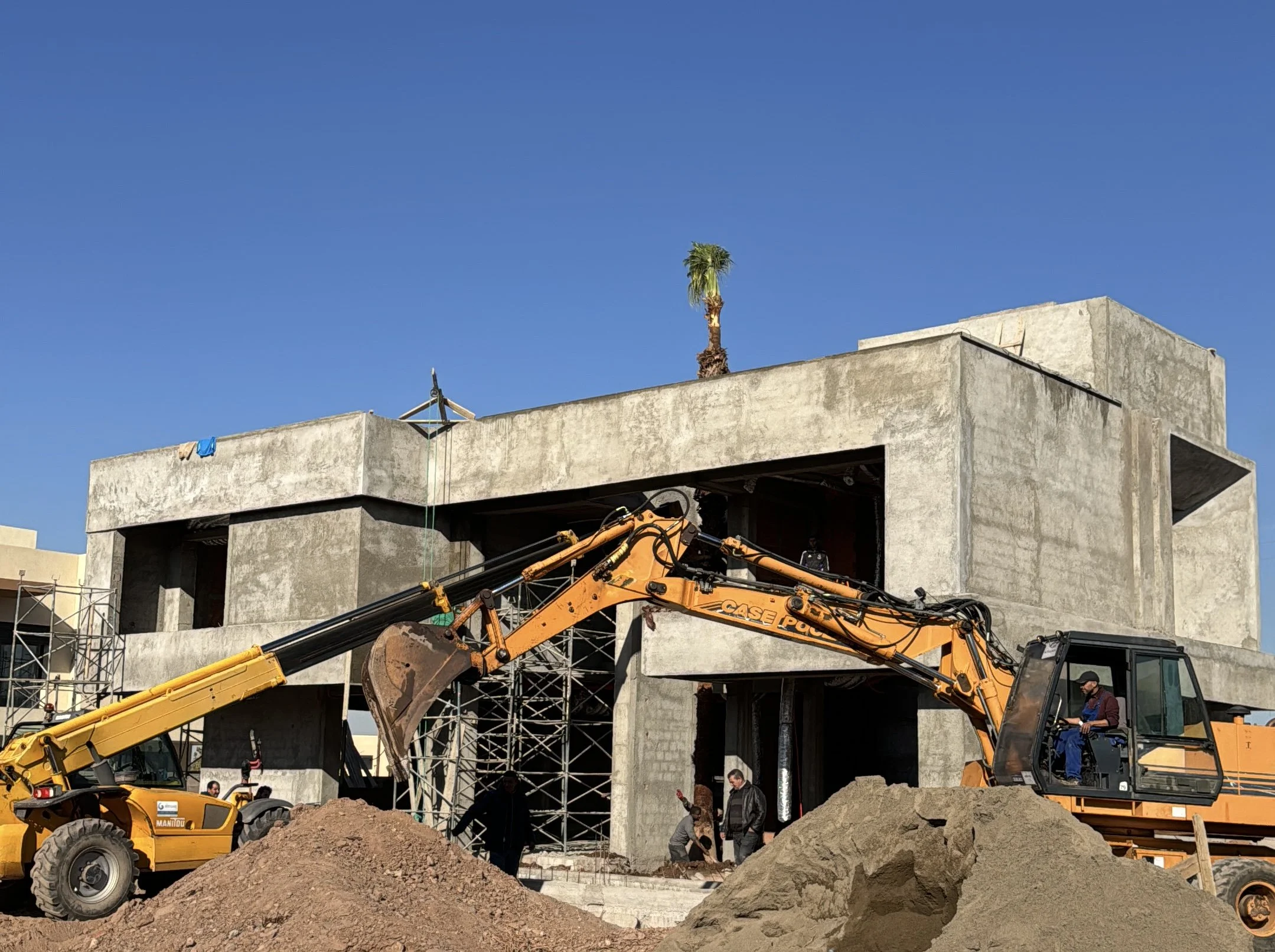
Marrakesh: 10 Lessons in building
Marrakech: 10 Essential Lessons in Building Your Dream Property
Marrakech: Lessons in Building
By Amal Lafhal | Design, Build & Lifestyle Expert
Marrakech teaches you things no architecture school will. Not because the curriculum is hidden, but because the lessons only reveal themselves when you are actually in it, standing on a plot of sun-baked earth in the Palmeraie at seven in the morning, watching a team of craftsmen mix tadelakt by hand the way their grandfathers did, wondering how a city this ancient continues to produce buildings this alive. After decades of building in Marrakech, we at Amal Signature Living can tell you with complete certainty: this city is the greatest teacher we have ever had. What follows are the lessons it taught us, offered without reservation to anyone serious about building here.
Lesson One: The Medina Was Not Built in a Day, and Neither Should Your Project Be
Marrakech's medina is a thousand years old and still standing, still breathing, still functional. The reason is not magic. It is the accumulated wisdom of builders who understood that permanence requires patience. Walls that will last centuries are not rushed. Foundations that hold through generations of Marrakech summers are not cut short. The greatest mistake we see first-time builders make in Marrakech is importing the construction timelines of other countries and assuming they apply here. They do not. The climate is demanding. The materials are specific. The craftsmen work to a rhythm that is their own, and that rhythm, when respected, produces results that are genuinely extraordinary. When pushed against it, the results are visible in ways that are hard to fix and expensive to ignore. Build your timeline around the work, not around your impatience.
Lesson Two: The Earth Itself Is a Building Material
Pisé, the ancient rammed earth technique that gave Marrakech its iconic ochre walls, is not a historical curiosity. It is one of the most thermally intelligent building systems ever devised. Rammed earth walls of sufficient thickness maintain interior temperatures that make mechanical air conditioning largely unnecessary in a well-designed Marrakech home. They breathe. They regulate humidity. They age beautifully, developing a patina over decades that no applied finish can replicate. At Amal Signature Living, we have built with pisé on projects where clients arrived skeptical and left converted. The lesson Marrakech teaches through its own walls, quite literally, is that the most sophisticated building material available is often the one beneath your feet.
Lesson Three: Shade Is Architecture
In a city where summer temperatures routinely exceed 40 degrees Celsius, shade is not a landscaping detail. It is a structural principle. The greatest buildings in Marrakech, from the Bahia Palace to the finest historic riads, are organized around the management of light and shadow with the same precision that a contemporary architect would apply to structural engineering. Courtyards that funnel cool air upward. Deep loggias that eliminate direct sun on glass facades. Roof terraces with pergolas positioned to the exact angle of the summer sun. Mature olive trees and palms placed not for aesthetics but for the shadow they cast at two in the afternoon. Every building decision in Marrakech should be evaluated through the lens of thermal comfort, and the city's architectural history is the most sophisticated textbook on that subject ever written.
Lesson Four: Water Is Sacred, and Your Design Should Treat It That Way
The presence of water in Marrakech's finest buildings is never accidental. The central fountain in a riad courtyard, the long reflecting pool in a garden pavilion, the narrow channel running through an orchard of citrus trees, these are not decorative flourishes. They are ancient climate technology, cooling the air through evaporation, creating the sound that masks the city's noise, signaling to every person who enters that they have crossed a threshold into a place of considered calm. Building in Marrakech without understanding the role of water in the architecture is like building in Venice without understanding the canals. Water here is structure. Design it with the same intention you give to your walls and your roof.
Lesson Five: Tadelakt Is Not a Trend
Few materials have been more romanticized and more misapplied in the global design world than tadelakt, the polished lime plaster finish native to Marrakech. In its correct form, applied by a trained maâlem using the traditional technique of burnishing with a river stone and sealing with black soap, tadelakt is one of the most beautiful and durable wall finishes in existence. It is naturally waterproof, which is why it was historically used in hammams. It responds to light in a way that no paint or synthetic finish can approximate. It improves with age. In its incorrect form, rushed by an undertrained applicator or applied over an incompatible substrate, it cracks, stains, and becomes a very expensive problem. The lesson here is not to avoid tadelakt. It is to use the real thing, executed by someone who has spent years learning how. In Marrakech, those people exist. Find them.
Lesson Six: The Courtyard Is the Heart of Everything
Western architecture organizes a home around its exterior facade. Marrakech organizes a home around its interior courtyard. This is not an aesthetic preference. It is a climatic and social logic refined over centuries. The courtyard provides light to all surrounding rooms without exposing them to direct sun. It creates a private outdoor space entirely shielded from the street. It generates natural convection, drawing hot air upward and pulling cooler air from shaded lower levels. It gives the household a shared centre of gravity, a place where life actually happens. Even in a contemporary Marrakech build that bears no visual resemblance to a traditional riad, the principle of organizing space around a protected interior core is one of the city's most enduring and valuable lessons. Ignore it and you will spend the rest of your time in the building wishing you hadn't.
Lesson Seven: The Craftsmen Are the Architects
This is perhaps the most humbling lesson Marrakech teaches, and the one that took us the longest to fully absorb. In a city with a living tradition of architectural craftsmanship, the maâlem, the master craftsman, is not executing someone else's design. He is contributing to it. A master zellige cutter understands the geometry of his material in ways that go beyond what any drawing can specify. A master plaster carver knows where a pattern needs to breathe and where it needs to intensify in ways that only become visible when the work is in progress. The best buildings in Marrakech are the result of a genuine collaboration between the designer's vision and the craftsman's knowledge. Approach that relationship with respect and curiosity, and your building will contain a depth of quality that no amount of money spent on imported materials can substitute.
Lesson Eight: Permits, Process, and the Importance of Knowing the Rules
Marrakech sits within a carefully regulated urban planning framework, and for good reason. The city's visual coherence, its ochre palette, its scale, its relationship between old and new, is not an accident. It is the result of planning regulations that take the character of the built environment seriously. Building heights, setbacks, facade treatments, and color palettes in many zones are subject to municipal oversight and in some cases to the review of bodies responsible for protecting Marrakech's UNESCO-adjacent heritage status. This is not bureaucratic obstruction. It is the protection of the thing that makes Marrakech worth building in. Working with a team that understands the regulatory landscape, that has existing relationships with the relevant authorities, and that builds compliance into the design process from the first sketch is not optional. It is the foundation of a project that actually gets built.
Lesson Nine: The Garden Is Not Separate from the Building
In Marrakech's finest estates and historic properties, the garden and the building are a single organism. The Majorelle Garden taught the world this. The gardens of the Menara and the Agdal, royal in their scale but instructive in their logic, teach it too. Planting in Marrakech is not decoration placed around a finished building. It is part of the climate system, the visual composition, and the daily experience of the property from the day you move in. The shade a mature olive tree casts over a terrace, the fragrance of night-blooming jasmine at a bedroom window, the visual depth that a long allee of cypresses creates when seen from the main entrance, these things take years to establish. They should be planned, planted, and irrigated from the earliest possible stage of the project, not added as a finishing touch when the construction budget has been largely spent.
Lesson Ten: Build for the Long Life of the Building, Not Just the Opening Day
The buildings in Marrakech that endure, the ones that are still extraordinary after fifty or a hundred years, were built by people thinking about permanence. The materials they chose age well. The details they executed are durable. The proportions they selected remain correct regardless of what furniture sits in front of them or what technology fills the rooms. Building in Marrakech is an act of optimism about the future. It says: this place will outlast me, and I want it to be worth the wait. At Amal Signature Living, that is the standard we build to on every project, regardless of scale, budget, or timeline. Marrakech demands it. And after everything this city has taught us, it seems only right to honor that demand.
Amal Signature Living has been designing and building exceptional properties in Marrakech and across Morocco for decades. If you are ready to build, we are ready to begin.